#5 - Hawksbill Turtle
Species Information
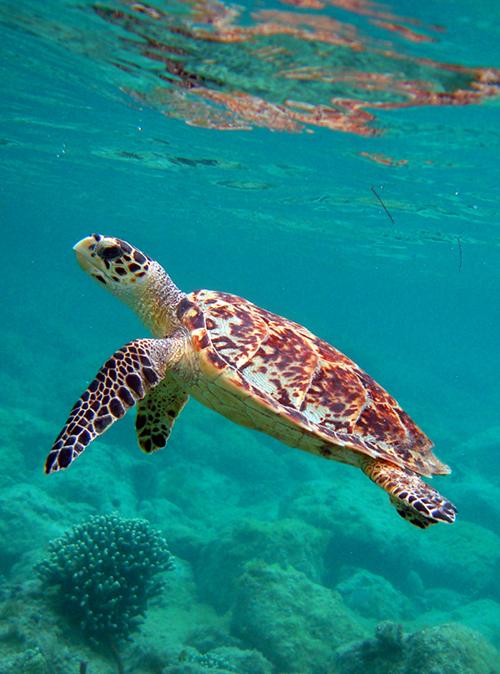
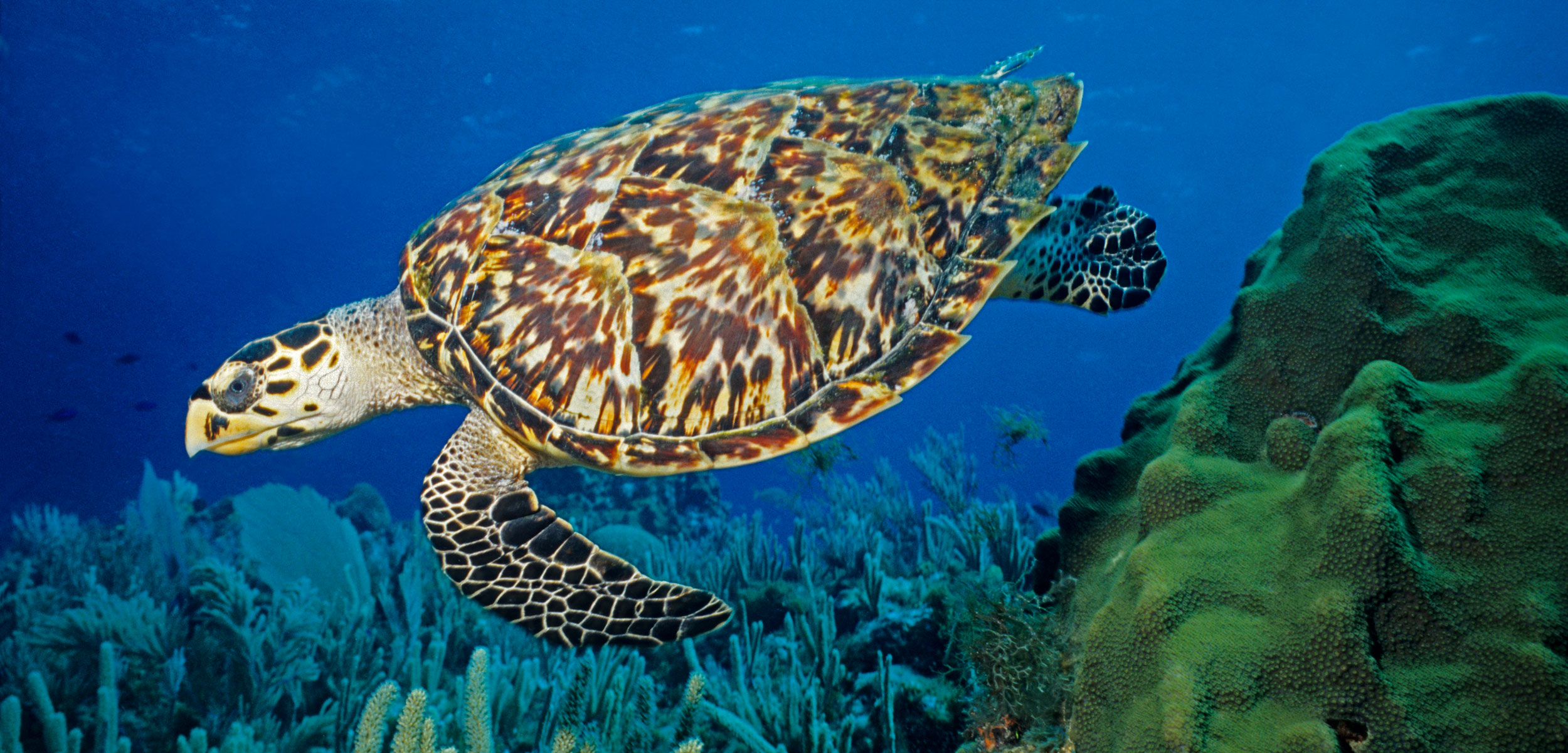
The Hawksbill Turtle is one of the most beautiful and ecologically important marine turtles, easily identified by its distinctive beak-like mouth and stunning, overlapping shell plates (scutes) that resemble roof shingles. These turtles play a crucial role in maintaining the health of coral reef ecosystems throughout tropical oceans worldwide. Their specialized diet of toxic sea sponges helps prevent these organisms from overgrowing and smothering coral reefs.
Hawksbill Turtles undertake remarkable migrations, traveling hundreds or even thousands of miles between feeding grounds and nesting beaches. Females return to the same beaches where they were born to lay their own eggs, a phenomenon known as natal homing. They nest every 2-3 years, laying several clutches of about 140 eggs each during a single nesting season.
Despite international protections, Hawksbill Turtles continue to face severe threats from illegal trade of their beautiful shell (tortoiseshell), which is used to make jewelry and ornaments. Additional threats include habitat loss of nesting beaches, accidental capture in fishing gear, marine pollution, and climate change affecting both nesting sites and coral reef ecosystems.
Did You Know?
Hawksbill Turtles are immune to the toxins in sea sponges, They're one of the few animals that can eat these toxic creatures, and by doing so, they play a vital role in keeping coral reefs healthy. Their beautiful shell pattern is unique to each individual, like a human fingerprint.